
Tag: books

  • Susie Steiner’s West Hampstead guide

    Susie Steiner’s West Hampstead guide

    I’m a seriously local person. I don’t like to leave my manor. When I leave Whamp, I feel like I need a decompression chamber to prevent the bends. I’m a homey, hanging with my FG-massive. I’ll stop being embarrassing now.

    My favourite place to eat: The Wet Fish, for posh nosh. We’ve tried the new posh one, Ham, and liked it. The Czech & Slovac Club (74 West End Lane) for schnitzel, dumplings, goulash – everything Czech in fact. And the best beer. I’ve been going there since my Czech grandfather first took me aged 5, so ahem a few years now. It hasn’t changed one jot except the smoking ban cleared the air somewhat. If you’ve never been, try it.

    Sunday roast at: home, obvs. Or The Green Room or The Alliance. There is def an opening for more Sunday roasts out – Ham, are you hearing us?

    I still miss: Tom & Jenny’s Kitchen Table. Dizar gift shop – remember that one? The flower lady who used to be at the entrance to the cemetary, before Tesco came.
    I don’t take change easily.

    West Hampstead could do with more: clothing and general shops. An old fashioned DIY store. I have a secret yen for a GAP. Pants and socks, people. Pants and socks.

    West Hampstead could do with less: estate agents, obvs. What have we done to deserve this plague of shiny suits?

    I hate that: the pavements are cluttered with wheelie bins, the high street awash with rubbish bags which the foxes raid. As a sight-impaired person, my travel down the payment is fraught with risk on bin day. But after hearing Georgia Gould, Camden Labour leader, talk about the brutal cuts to local authority budgets, I reluctantly concede that the bin changes were necessary. Reluctantly, I tell you. I mutter audibly to myself as I step around seeping bags on Fortune Green Road.

    The best place to walk: round the cemetery in high summer, across the Finchley Road and up the paths to the Heath in autumn, down to the farmers market on Saturday mornings.

    Hold your kid’s party at: Play centre on Fortune Green, which also happens to be the best after school/holiday play scheme in town with the loveliest staff.

    Get drunk at: I’m a notoriously tame drunk. Half a shandy, home by 9pm. But I choose to spend those precious un-drunk minutes at Bobby Fitzpatrick’s, because it’s so like being in my living room. Also, excellent nachos slathered with everything.

    Exercise at: I’m sorry what? I can’t hear you.

    Have your hair done at: Tila Studio, on Fortune Green Road. Amazing hair colouring. Also, profesh make up – useful if crap eyesight leads to frankly bizarre make-up application.

    Fill the cultural tank at: West End Lane Books of course. Brilliant readings by authors (not just me), seriously good thriller recommendations from Danny and an all round warm hug of a shop. Also hilarious on Twitter. JW3’s not bad also.

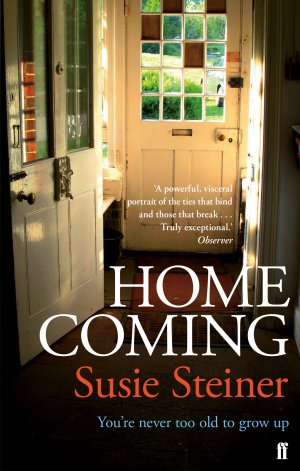
    I will be at West End Lane Books on April 26 to celebrate paperback publication of Persons Unknown, my latest Manon novel, along with the murder squad detective who advises me on all things procedural. He’s seriously interesting. Come for him. Contact West End Lane Books (see below) to reserve a spot.

    My books have a distinct local flavour. Missing, Presumed mentioned Fordwych Road and Fortune Green both appearing, and a couple of characters buy Soleros on Mill Lane (gripping), while Persons Unknown is awash with Killy High Road refs. It’s out in paperback on April 5 and signed copies are available from West End Lane Books or tweet them @welbooks.

  • An Insight with: Roma Agrawal

    An Insight with: Roma Agrawal

    This month we spoke to Roma Agrawal, engineer and debut author (and West Hampstead resident).

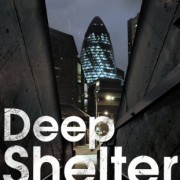
    Roma spent six years working on the construction of the Shard. During that time she was asked to give presentations about the Shard, first to other engineers, to outside groups such as the Womens Institute, and then to schools. She really enjoyed going out and raising awareness, “People don’t really hear about engineers and certainly not in a positive way”.

    One day she was asked, why don’t you write a book about it? And the result is ‘Built: The Hidden Stories Behind Our Structures‘, which is published today.

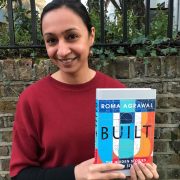
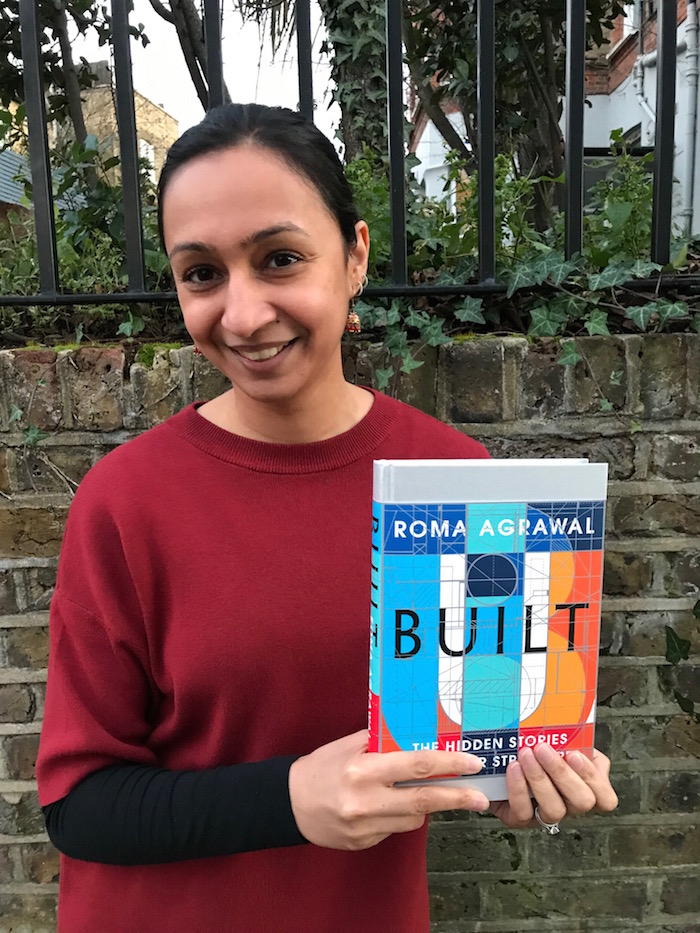
    Roma, her book and some West Hampstead bricks

    Before we learn more about the book, what brought you to West Hampstead?

    “I had family connections to the south in St. John’s Wood and to the north in Mill Hill, so when we were looking for somewhere to live this seemed like an obvious choice.  I love the fact that it is between the Finchley Road and the Kilburn High Road but also has its own high street”.

    What is your first/fondest memory of the area?

    “The first time I went to the farmer’s market. I just loved it, it was so lively and it really felt like there was a community here.

    A close second was the opening of the Sherriff Centre, it’s been a great addition. And as an engineer, I love just looking up at the brickwork and the ceiling.”

    Tell me a bit more about ‘Built’?

    “It came out of my talks and lectures. I just loved telling people about engineering. It’s all around us; the buildings we live in, the bridges we walk over and the tunnels we travel in. I wanted to peel back the facades.

    Here in West Hampstead, the Victorians built a lot using different types of brick (which are made from clay that can be 50 million years old with tiny fossils in it). The churches, in particular, are amazing – I sometimes just go into the Sherriff Centre and gaze at the soaring ceiling.

    I also researched people such as Emily Roebling, who engineered the Brooklyn Bridge (taking over after her father-in-law who died suddenly and her husband who got the bends from diving too deep). Or Fazlur Rahmen Kahn, a Bangladeshi child prodigy, who has changed the way we design skyscrapers. It used to be that they were 60-70 storeys, now they can build double that height.”

    As for the book, Roma quipped “Do judge a book by its cover – I’m really happy with design!”

    What is for lunch (or dinner)?

    “I’m a huge fan of Anjanaas in Kilburn, at the bottom of Willesden Lane. They do South Indian food – I’m from India but don’t generally like Indian restaurants in London, but I love Anjanaas.

    There is another good restaurant next door, Vijay’s which is also good but it is only vegetarian. Whereas Anjanaas does some meat and fish as well, in fact it does great fish, so it’s got the edge.

    We also really liked Mamacita, so I miss that since it’s closed.”

    Describe West Hampstead in three words

    Eclectic, friendly, (with some great) sunsets.

  • Un ‘Insight’ avec Hélène Clément

    Un ‘Insight’ avec Hélène Clément

    West Hampstead has a quite long literary pedigree – which continues to this day, with three local book launches in September alone. This month sees the launch of another one, but not in English and not at West End Lane Books. Mais non! This book is called “Le Plus Beau Reste á Venir” (Ed = The Best Is Yet To Come) and the launch will be at the French Bookshop, La Page, in South Kensington on Saturday 14th October. The author is Hélène Clément, one of West Hampstead’s large and growing French community.

    What brought you to West Hampstead ?

    Luck, really. When I had just moved to London nine years ago I was staying in Hounslow, which was way too far from… everything. When a colleague said she had a spare room in her flat on Lymington Road, I took it before even checking West Hampstead out. Best decision ever ! I immediately fell in love with the area. Since then, I’ve had to move flat twice, but never looked anywhere else. West Hampstead truly feels like home.

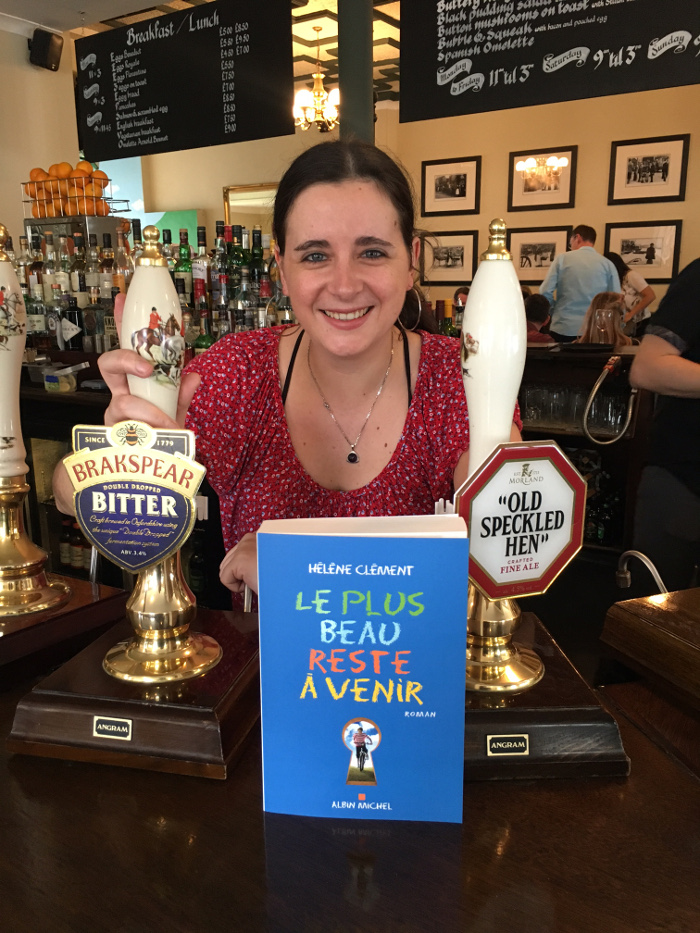
    Behind the bar at the Alliance

    Tell us a bit more about your book. Is it your first one ?

    ‘Le Plus Beau Reste a Venir’ is my first book, yes, so I’m over the moon and really proud that it got published by an important French publishing company.

    The book tells the story of four characters, when they’re teenagers in the 90s, and when they meet again in 2010, after eleven years of estrangement, to overcome the loss of the teacher who had changed their lives and brought them together in high school. ‘Le Plus Beau Reste à Venir’ is about second chances, family, friendship and little attentions. Those little attentions which cost nothing but can make a huge difference in someone else’s life.

    Where did you write it? And did West Hampstead inspire you?

    Some writers need silence and stillness. I need activity. I need fresh air. I need to watch people and everyday situations. So I wrote 90% of my novel outdoors, in West Hampstead, on my notebooks. I was managing a coffee shop in Hampstead Heath at the time. Every day, I would leave work around 3pm and walk back to West Hampstead, to oxygenate my brain and gather my ideas. Once on West End Lane, I would find my writing spot of the day, at one of the cafes in the area if it was rainy. Otherwise, I would head to West End Green, Fortune Green, Hampstead Cemetery or the playground between Lymington Road and Potteries Path. And I would write for hours, inspired by the buzzing life around me.

    My story takes place in a French high school, in the French countryside, so not in West Hampstead, obviously. But my readers will never know how much less obviously it’s been fed by West Hampstead. But it does and my affection for the area has grown stronger through the writing of my novel. I can assure you that, one day, I’ll write a novel all about West Hampstead !

    What are you West Hampstead favourites ?

    For coffee, I always go to Caffè Nero because the team, led by the lovely Teresa, is amazingly friendly, and I’m addicted to their mochas. For a drink, I would highly recommend Thunderbird. Moussa is a gem of a manager ! As for food, Lena’s Café was one of my all time favourites, I’m really sad it has closed down.

    Now, if you’re looking for everything at once: great coffee, great drinks and incredibly good food, just come to The Alliance. I won’t get a pay raise for writing this, I truly mean it. I was a customer there long before starting to work for Mike. This is one of the coziest places around and the dining menu is a marvel!

    How is life as a French expat in London? What do you miss the most ?

    Life in London is amazing. I feel very lucky to live in such a vibrant and open-minded city. If it wasn’t for my accent giving me away, I wouldn’t feel like an expat anymore ! I’m from Carrières-sous-Poissy, a small suburban town, forty-five minutes west of Paris, really close to Saint-Germain (if you follow French football)!

    What do I miss the most ? Cheese, obviously ! And pavement seating areas, there aren’t enough of those in Central London.

    Describe West Hampstead in three French words :

    Paisible – Chaleureux – Charactère. (Ed = peaceful, warm and characterful)

  • ‘The Art of Failing’, the West Hampstead way

    ‘The Art of Failing’, the West Hampstead way

    Local author Tony McGowan’s new book ‘The Art of Failing‘ is described by the publisher as ‘A laugh-out-loud chronicle of one man’s daily failures and disappointments, set in West Hampstead‘.

    He has a book reading coming up at West End Lane Books on Thursday this week, so we popped by for a cup of herbal tea to have a chat. Tony couldn’t actually find a herbal tea bag, so the following events took place over a cup of hot water with a measly slice of lemon.

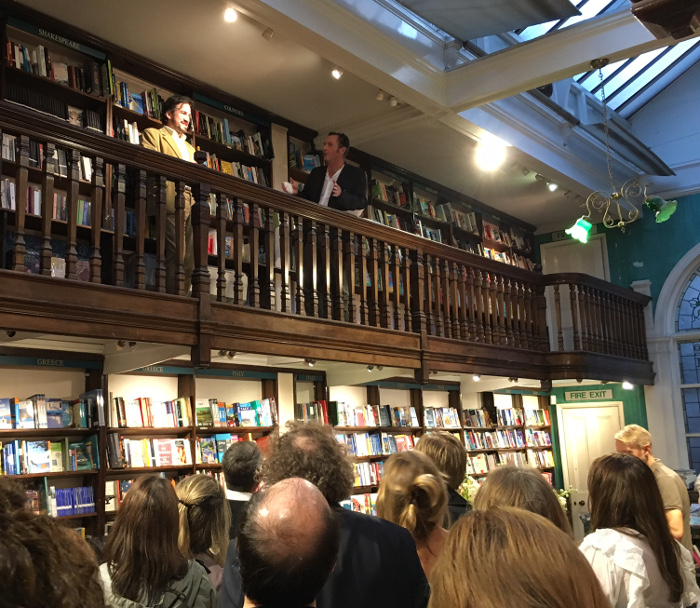
    The book is in diary format and according to his agent was ‘not an obvious book to publish’ as it is a series of Facebook musings turned into a book, but published it was, with a book launch last week at Daunt books in Marylebone.

    'Don't cry for me, West Hampstead. The truth is I never left you.'
    ‘Don’t cry for me, West Hampstead. The truth is I never left you.’ Pic: at the book launch at Daunt’s Books

    How did it come about?

    “Well, my personal writing style is observation and a touch surreal so I needed some space, but I was interested in writing something over social media. As Twitter is only 140 characters, Facebook seemed the natural choice. Quite early on I realised that the ‘likes’ (which became quite addictive) offered a feedback loop on what was popular so it helped shape things. So the musings on cricket, for example, had to go!”

    The book appears to be a diary or journal, but a lot of what happens seems bizarre and extraordinary. How much of it is true?

    “All of it to some extent, much is as true as I could make it, there is a kernel of truth in all of it.

    For example, take the dwarf doppelgänger called “Heimlich” who I encountered one evening when I was out walking the dog. Suddenly I heard this panting and pounding sounds behind me. I turned around and there he was. I stared at him, he stared at me, but then ran off. When I got home I told my wife and kids about him and they said ‘nah’, but I occasionally saw him after that and yet they continued to think he was figment of my literary imagination. This ties into another strand of the book about my marriage being under strain by increasing weirdness during that period. When that was over I was out with my wife and daughter and we ran into Heimlich; we all saw him. So they realised he did exist and yes they agreed he did even look a bit like me, just smaller.

    My approach is to look at the world in a different way, even at mundane events, so even something usual becomes a new thing”.

    For a book that is supposed to be funny, some parts are quite sad/poignant. Does the sadness undermine the humour?

    “Part of the narrative is the disintegration of my character and my isolation from my family – it’s exaggerated of course, but it came after a successful period and things felt a bit flat, my career seemed to be heading downhill. Yet the comedy comes from that – it has an edge. However, the reviews and feedback I have had tended to see only the humour. As writer (or artist) you create what you can and put it out there, you can’t control how others react”.

    Your family appears in the book. How do they feel about that? Especially the fearsome Mrs McGowan*…

    “The kids are fine with it, they drift in and out of the text. My wife Rebecca plays a more central role so that was trickier. She can appear hard and cruel but is also rather beautiful so that was OK. I’ve discovered that way round is fine for people I write about, but not vice-versa”.

    (* I was at university with Mrs McG and we nearly went out, except she turned me down. How different history could have been.)

    What else have you written?

    “I written a number of books for teenagers. The ‘Donut Diaries’ is a comic trilogy set in the north of England where I grew up.  The other books are all stand alone novels; ‘Hellbent’ about a teenager who dies and goes to hell – it’s a comedy, ‘Jack Tumor’ about a boy who discovers he has a brain tumour and keeps hearing voices. It’s inspired by Henry IV with the tumour playing the role of Falstaff. I’ve also written ‘The Knife That Killed Me’, which tackled teenage knife crime and was made into a film”.

    In some ways the book is a love song to West Hampstead.  What are you favourite things about the area?

    “What are my little stations of the cross? Well there’s Hampstead cemetery, the best open space in the area. It has everything; wilderness, history and a sense of poignancy of the graves. Each one is a story.

    I’m also a big fan of the charity shops as a collector of first editions I’ve found a couple over time. Socially, a recent find is Tannin and Oak. Plus a long standing favourite where you often find me and Mrs McG having lunch is the Wet Fish Cafe. I used to go a lot to the Czech (and Slovak) Club but that’s tailed off.  And of course there is Lately’s.”