A visit to Nona on Fairhazel Gardens seemed a decent idea, as it meant stopping off for drinks beforehand at The Arches, the most charming bar in the area and a venue of even more stature and importance since the closure of the much-missed La Brocca. And so, after a really excellent glass of Sauvignon Blanc, on to the restaurant…
To start, chargrilled sardines, which I could happily eat as a main, in large quantities; these were a pleasure to devour. A little baked mushroom dish also appeared, the mushrooms filled with ricotta and spinach, with a cream sauce – quite rich for a first course, and satisfying. Nothing high-brow, but piping hot and well seasoned.
SardinesBaked mushrooms
For a main course, as I was dining with a vegetarian, I decided I’d join in the fun (?) and try something veggie myself. This wasn’t too difficult a decision once I noticed a salad of chargrilled aubergines and roasted tomatoes with feta. The dish worked well because the salad element featured plenty of coleslaw, which added substance and a crunch factor. The aubergines were perhaps a little firm (also noted in the risotto) but I guess that was due to grilling rather than frying.
Aubergine salad
Across the table, risotto alla caponata (more aubergine, garlic, feta and tomato sauce) was also enthusiastically received, and sides of sautéed potatoes and ciabatta (oddly spelled incorrectly on the bill!) provided further carb relief. Nona’s menu is appetising, with a great deal of variety even down to the side dishes, which causes chaos for greedy types like me who generally want to eat everything. In both choice, and value, it’s along similar lines to the equally appealing and ever-popular Little Bay (side note: extremely sad to see the Farringdon branch of LB closed).
Risotto
For inexplicable reasons, we didn’t drink Italian wines, instead opting for a French Pinot Noir at £25 then a Rioja at £5.85 a glass; both enjoyable, the latter the better one.
This is a fun, upbeat restaurant serving gratifying plates of straightforward food at very fair prices, perhaps meaning one can pop back into The Arches afterwards and browse its wine list. Or, as we did, finish up with a drink directly outside Nona, in this very likeable, leafy little location. No room for puds on this occasion, but the website sagely advises that “saving room for dessert is an extremely wise move” – so good reason to return soon.
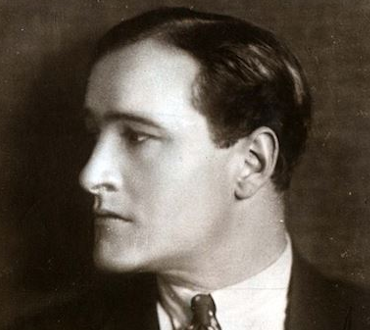
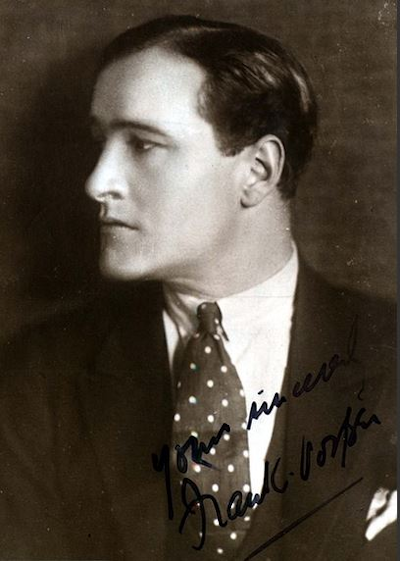
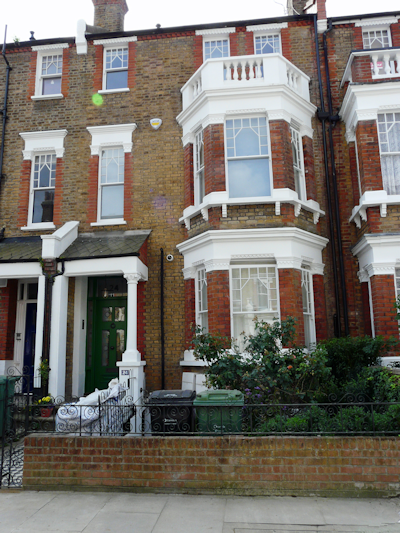
Frank Vosper was born in December 1899, just two weeks before the turn of the century. He was born at 24 Gondar Gardens in West Hampstead – the house where Nobel prize-winning novelist Doris Lessing lived for more than 30 years before her death in 2013.
Vosper’s father Percy was a surgeon at Kings College Hospital, having come from Plympton in Devon to study medicine in London. In 1894, Percy married Blanche Permain, whose father was a fine art dealer and they had moved to Gondar Gardens at the end of 1896.
Frank would have had a comfortable upbringing, yet the story of his premature death at just 36 would have made as good a film as any he might have acted in, with a cast list that included Ernest Hemingway and Miss Great Britain.
24 Gondar Gardens
Frank Vosper was educated at Haileybury School in Hertfordshire. He wanted to be an actor, and when he left school at 17 he called on a theatrical agent who had previously been a pupil at his old school. Incredibly, just on the basis of this shared experience, the agent got him work and young Frank appeared in ‘Julius Caesar’ in March 1919 at the Pavilion Theatre in Mile End.
Frank was talented, and became a very successful actor. After working with actor-manager Sir Ben Greet’s Shakespeare Company, Frank first appeared in the West End in ‘The Young Visitors’ in 1920. After this he left on a theatre tour of India and the Far East. On his return in 1922 he played a succession of both modern and Shakespearean roles. In 1926, Frank joined the Old Vic Company and worked with some of the great actors of the day including Jack Hawkins, Anthony Quayle, Alec Guinness, Margaret Rutherford, and Dame Edith Evans.
He appeared in ‘Yellow Sands’, Eden Philpotts’ very successful play which ran for more than 600 performances. Frank was best known for playing Henry VIII in ‘Rose Without a Thorn’, a 1933 play about the relationship between King Henry and Catherine Howard. There is a short film of him getting into costume as Henry, plus clips of his performance.
After leaving the family home, Frank got a small flat at 7 Upper St Martin’s Lane in Seven Dials, where he lived from 1925 to 1927. He became friends with John Gielgud and they appeared together in ‘Hamlet’.
In his 1939 autobiography, Gielgud wrote:
As soon as ‘The Constant Nymph’ had settled down to a certain success, I persuaded my parents to let me leave home. Frank Vosper was shortly to move from a little flat in Seven Dials where he had been living for some time. I greatly admired this flat and arranged to take over from him the rest of his lease. The flat was full of character, and I stayed there for eight years. There was no proper kitchen, and the bathroom, with a rather erratic geyser, was down a very draughty flight of stairs. But otherwise the place was charming. The sitting-room walls had been covered with brown hessian by Vosper, and there was a ceiling in one of the bedrooms painted by an artist friend of his (under the influence, I imagine, of Braque), with large nude figures sprawling about. This I thought very modern and original.
In January 1933, Frank Vosper had a major role in a play called ‘The Green Bay Tree’ by Mordaunt Shairp. This was very controversial. Frank, who was not openly gay, played a homosexual aristocrat who adopts a working-class boy and remodels him in his own image. Mordaunt Shairp was a schoolmaster who lived with his wife at 13 Heath Mansions in Hampstead and had taught at University College School in Frognal from 1920 to 1933 when he left to become a full time playwright. The title of ‘The Green Bay Tree’ is taken from Psalms 37:35. ‘I have seen the wicked in great power, and spreading himself like a green bay tree’.
In the play, Frank Vosper played Mr Dulcimer, a wealthy man who bought an 11-year-old boy from his working-class parents for £500. He raises Julian as his stepson and the boy becomes addicted to Dulcimer’s Mayfair way of life. Julian then has to choose between marrying his fiancée Leonora, or staying with Dulcimer.
Although never directly stated, a homosexual relationship is clearly implied. Shairp said he wanted it to be a modern morality tale based on Dr Faustus. The play was very successful and played for six months at the St Martin’s Theatre. It was also very popular when it opened on Broadway in October 1933 when a young Laurence Olivier played Julian and Jill Esmond, who later became Olivier’s wife, played Leonora. It was frequently revived on Broadway and was produced in London at the Jermyn Street Theatre as recently as December 2014.
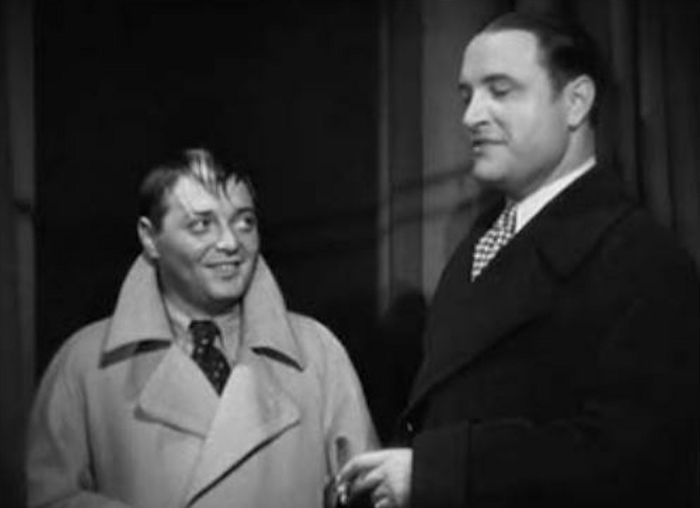
Vosper’s work on stage got him excellent reviews and he began to work in films. He appeared in more than 20 including, Alfred Hitchcock’s ‘The Man Who Knew Too Much’ (1934), where he played Ramon the assassin (this was also Peter Lorre’s first English film). Hitchcock remade the film in 1956 with James Stewart and Doris Day. In 1934, Vosper had a starring role in Michael Powell’s early low-budget thriller, ‘Red Ensign’.
Peter Lorre and Frank Vosper in The Man Who Knew Too Much, 1934
In addition to being an actor, Frank wrote several plays. His first was ‘Spellbound’, which he produced in 1927. He later rewrote it as ‘People Like Us’. In Who’s Who in the Theatre, Vosper amusingly describes his recreations as ‘criminology and blackberrying’. He was a regular visitor to the Old Bailey and ‘People Like Us’ is based on the notorious Thompson-Bywaters case: in October 1922, Edith Thompson persuaded her young lover Freddie Bywaters to murder her husband. The pair were executed in 1923, although many people thought Edith was not guilty of murder and should not have been hanged. The play had a very brief run at the Strand Theatre in 1929, but was banned by the Lord Chamberlain’s office because of the subject matter. It was not performed again until 1948.
Vosper persuaded Agatha Christie to let him adapt her short story into the play ‘Love From a Stranger’. The first night was so tense there were reports that some of the audience fainted. It received very good reviews and ran from March to August 1936. He then took the play to Broadway where it ran for another couple of months later that year. The play was twice turned into a film and was televised by the BBC in 1938 and 1947. A radio version was also broadcast on the BBC Home Service in 1945. Another of his plays ‘Murder on the Second Floor’ was filmed in 1932 and again in 1941 as ‘Shadows on the Stairs’.
By 1935, Frank Vosper was living at 34 Acacia Road in St Johns Wood with his partner, the actor Peter Willes. Willes was born in London on 30 April 1913. He was the son of a lawyer, and educated at Stowe. By now, Vosper was at the height of his career and on 9 September 1936, he and Peter sailed on the SS Aquitania to New York where Frank’s play ‘Love From a Stranger’ was to appear on Broadway. Then in December, Frank and his sister Margery went on holiday to Jamaica and were joined in Mexico by Peter, who had been in Hollywood acting in the film ‘Call it a Day’. After Margaret returned to London, Frank and Peter journeyed on to Havana, Hollywood, and then to New York.
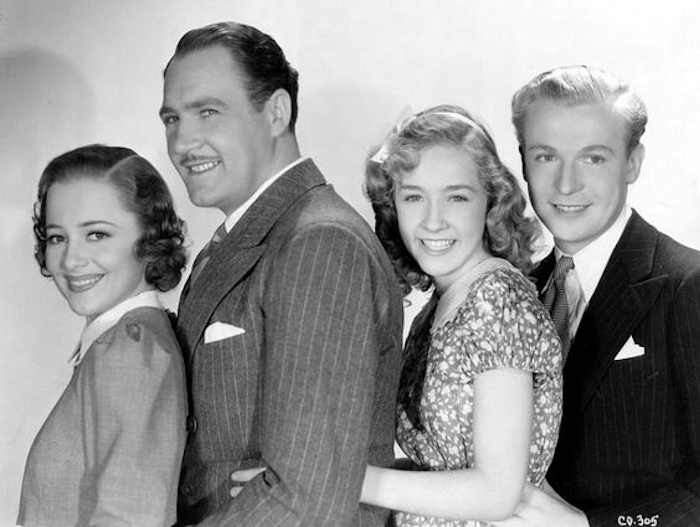
From left Olivia de Havilland Ian Hunter Bonita Granville and Peter Willes, Call it a Day 1937
All at sea
On 6 March 1937, Frank and Peter returned to England having sailed from New York on the SS Paris. Other passengers included the American writer Ernest Hemingway and Muriel Oxford, Miss Great Britain 1935, who – after a couple of small parts in films had been undertaking film tests in Hollywood. Here is a film clip of Muriel at a beauty contest.
In the early hours of that Saturday morning, just before the ship was due in to Plymouth, Frank was reported missing. Just over two weeks later, his body was found more than 200 miles away near East Dean in Sussex.
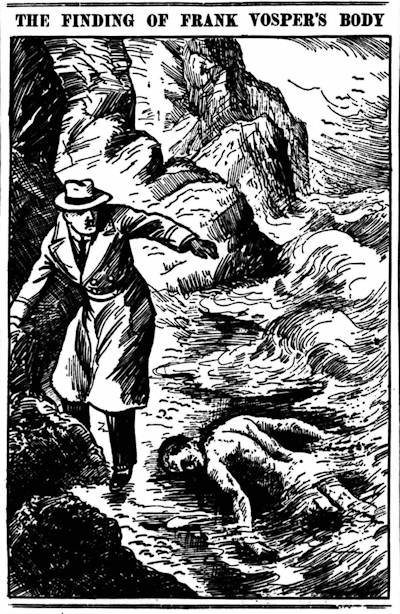
Drawing of finding the body Illustrated Police News 1 April 1937
The papers speculated wildly about what had happened. Peter Willes told reporters that he had met Muriel Oxford at a party on the ship, and that she invited him to her state room where they were joined by Frank. As they drank champagne, Frank had gone into the adjoining lounge where they believed he had climbed out of a window and fallen into the sea. But was it an accident or suicide?
Did he slip, or did he jump?
At the enquiry, Muriel confirmed Peter’s version of events. She had been at a party in the ballroom the night before the ship was due to dock. She had danced with Peter Willes before ordering a bottle of champagne to be taken to her state room. Although she hadn’t met Peter or Frank before, she explained that she asked them to her join her as they were the only Englishmen onboard. Willes had returned to the cabin that he shared with Vosper who reluctantly agreed to go to Muriel’s state room. They sat talking and after about 20 minutes, Vosper got up and walked across the state room to the private lounge. Muriel thought Frank wanted some air and she showed him how to open the window. Later when she and Peter couldn’t find Frank, they raised the alarm.
Peter Willes believed that Frank, who was very short sighted and had broken his glasses, must have thought the low sill of the window led to the boat deck and not straight into the sea. He said Frank always preferred to leave parties unobtrusively so as not to appear rude. But he could not believe Frank had committed suicide. He was far too keen on his work and had spent the whole journey writing a new play.
William Pengelly was Frank’s solicitor and he was determined to find out exactly what had happened. In scenes foreshadowing today’s Crimewatch, he asked Muriel and Peter to reenact the scene on the SS Paris in his Gray’s Inn office. Pengelly also went to Paris to interview Ernest Hemingway who had been travelling on the ship. Hemingway occupied a state room opposite Muriel and strongly denied the press stories that Vosper had argued with people during the voyage, or that Willes had been very attentive to Miss Oxford and that Vosper could have jumped out of the window in a fit of jealousy.
Around the same time, and before a body had been recovered, Peter and Muriel went to Le Havre to help the French examining magistrate by reenacting the events onboard the SS Paris itself. The Magistrate ruled out foul play believing that Vosper committed suicide.
Frank’s badly damaged body was identified by his father Percy. At the beginning of the inquest in Eastbourne, Percy said that Frank was always bright and cheerful and was particularly level headed. He was not keen on parties, and did not stand alcohol very well. But he was not quarrelsome and his father had never seen him drunk. When asked, Percy said he was not aware that Frank had any love affairs. None of the stories in the newspapers revealed that Willes and Vosper were partners.
The inquest, which had begun at the end of March, resumed on 6 April as the jury had decided it could not reach a verdict based only on Muriel and Peter’s evidence. They wanted to hear from the ship’s staff. The court was packed as Robert Cubillare, a night steward, speaking through an interpreter, said that at about 2.15am he had gone to Cabin 243 occupied by Mr Vosper and Mr Willes, and Miss Oxford was there. A lady in an adjoining cabin had complained about the noise, and the steward asked them to keep quiet. A few minutes later the three of them went to Miss Oxford’s state room.
Charles Carbon, the night steward to the state room, said he was summoned at 2.45am. Miss Oxford and Mr Willes were lounging on the divan and were a little merry. Mr Vosper was standing motionless in front of them. When asked if Vosper was laughing or joking, he said Frank was quite silent. Carbon took a bottle of champagne from Miss Oxford and went to put it on ice. When he returned, Frank was missing. He and Mr Willes went to look for Vosper and when they couldn’t find him, the Captain was informed.
The Captain said he was told about Vosper’s disappearance about 3.10am, but he did not think anyone could have got through the small window, and as nobody had seen a man fall overboard, he thought that Frank had simply left the cabin to take some air on the deck. He only reported Frank’s disappearance when they reached Plymouth in the morning. Questioned by Mr Pengelly who represented the families, the Captain admitted he had found some marks on the white window sill.
In his evidence, Mr Pengelly said he known Frank Vosper for 11 years and his financial position was good. He confirmed Vosper was rather sensitive about his poor eyesight and would never wear his glasses in public. Pengelly said he thought it was perfectly possible to step through the window despite what the Captain had said. To demonstrate, he placed a cardboard frame the same size as the window easily over his shoulders. He thought that if Vosper believed there was a deck on the other side then he could have fallen by accident.
The coroner in addressing the jury, said there appeared little doubt that Mr Vosper had gone through the window. The only question that remained was whether he had done so deliberately to end his life, or was he under the impression that there was a deck on which he would land, in which case it would have been an accident. If it was a case of suicide, it must have been a sudden impulse because he had sent a cable from the ship that afternoon to an old friend saying he was landing the next morning.
The jury took just 25 minutes to reach an open verdict on Frank Vosper’s death. They decided that he met his death by drowning, but it was impossible to say how he got into the water.
What became of the other cast members?
After the inquest, Muriel Oxford, white-faced and angry, told reporters, There was no love making in my state room. These stories are the hardest thing to bear. We were not lying on the settee; we were sitting side by side with our backs against the wall. I deny the stories that Willes and I are in love.
In November 1937, she successfully sued the Daily Mail and the Daily Mirror for making libellous claims about her morality. The solicitors representing the newspapers apologised and said there was no intention of making such aspersions. There was no mention of any financial recompense, though there may have been an out-of-court settlement.
The disappearance of Frank Vosper gave rise to the cruel saying, ‘Never get on a ship with Peter Willes’, which was still in circulation in the 1960s. Willes would go on to have a successful career nonetheless. He appeared in ‘The Dawn Patrol’ (1938) with David Niven – a classmate at Stowe, and ‘Idiot’s Delight’ (1939) with Clark Gable. After a distinguished war service, in 1947 he became the tour manager for popular comedian Vic Oliver. This proved good training for his TV work at Associated Rediffusion as a talent scout and producer. Willes produced TV plays by Harold Pinter and Arthur Miller’s ‘A View from the Bridge’. From 1966 to 1978, he was the innovative Head of Drama at Yorkshire Television and produced several Joe Orton plays. Willes became a good friend of Orton’s but disliked Orton’s partner Kenneth Halliwell who eventually killed Orton and then committed suicide in August 1967. Peter Willes himself died in Gloucester in 1991.
In his will Frank Vosper left £10,463 (worth about £600,000 today), to his solicitor and executor, William Pengelly.
There is a short news clip about Frank Vosper here:
In 1939, Sir John Gielgud wrote about his friend Frank:
His tragic death two years ago was a great shock to all his friends, and I miss him continually. I knew him well for nearly fifteen years. As a companion he had inimitable gaiety and charm. He was generous to a degree, a delightfully Bohemian and charming host and, as an artist, completely free from jealousy of any kind. He often gave the impression that he behaved selfishly in doing exactly as he liked, but in reality he enjoyed nothing so much as giving pleasure to other people. … His happiest time, while I knew him, was during the brilliantly successful run of his own play, ‘Murder on the Second Floor’. His diversity of talents created quite a sensation with the production of this play, and he was hailed by the public and idolised by his company. His dressing-room at the Lyric Theatre was always crowded with friends and acquaintances, and after the play there would be endless parties which went on till the small hours. But Frank was equally happy with just one or two intimate friends, and later he bought and furnished a beautiful little house in St. John’s Wood, ceased to entertain so widely, and settled down to a positively domesticated existence, writing, doing enormous jigsaw puzzles, and joking about how busy everyone else always seemed to be.
Unfortunately, we are left not knowing what really happened to the multi-talented Frank Vosper, who tragically died aged just 36.
What has 270 screens, air conditioning, and smells like pink grapefruit? If you answered Studio Society, then you’re absolutely right. Get ready to get your pump on, because our doors are open and our classes are filling up. And we’ve got a special offer opening price.
We’ve built this fitness club on the belief that great training shouldn’t be reserved for the select few. We believe that the latest and greatest fitness technology should benefit everybody; that getting fit and staying fit should be accessible, enjoyable and – most of all – fun.
That’s why we use immersive training in our classes. Think surround screens, high-quality sound and a scent to match your workout. You see, when all of our senses are activated, our bodies are more responsive to exercise, which means you have a better time and enjoy faster results.
De-stress with calm classes like yoga and meditation, feel your pulse quicken with HIIT and Bodypump; cycle for all you’re worth on one of our high-tech bikes, or condition and tone with our series of Sculpt sessions. Choose virtual or real-life instructors, and choose your own schedule – we have classes running all through the day and evening.
Right now, we’re offering a special opening price of £26.95 a month. There’s no contract and you get unlimited access to all our classes, plus nutritional advice and progress tracking as well. Pop by for a tour, or check out the website for more information. We can’t wait to show you around!
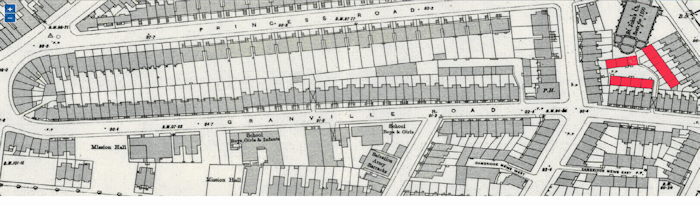
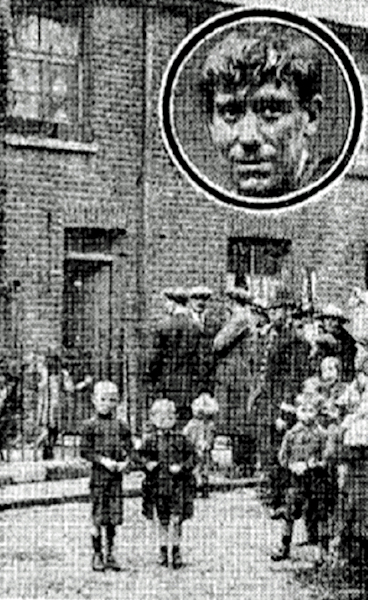
Pembroke Place was a cul-de-sac of four-roomed houses off Granville Road in South Kilburn. It has long been demolished – today the St Augustine’s sports centre occupies roughly the same site. In the early 20th century, it was described as a mean and congested neighbourhood, where domestic violence often erupted. The properties were so small they were sometimes referred to as cottages and they were home to an endless succession of poor families. But even here, people were shocked by the skeleton under the floor.
Granville Road showing Pembroke Mews in Red 1890
In late July, 1919, Henry Hill – the tenant of No.12 Pembroke Place – became concerned about the foul smell in the house and found bones and a skull buried under the kitchen floor. The press immediately called the discovery ‘The Kilburn Mystery’. Initially it was believed there were two bodies and Sir Bernard Spilsbury, a pathologist who first came to public notice during the 1910 Crippen trial, was called in. Unfortunately the police removed some valuable evidence before Spilsbury arrived, but he soon identified the bones as those of a single young female.
Almost immediately, neighbours told the police they knew who it was. They believed the remains were those of sixteen-year-old Constance Grant, known to friends and family as Connie.
William John Grant and Alice Maud White, had occupied the house for just over a year before leaving that January. What unfolded over the next few weeks was a tragic story of neglect, poverty and cover-up.
William was born in London and worked as a labourer, but by 1919 he was employed as a boiler cleaner in a gas works. In 1888 he had married laundry worker Rosina Pyle. She died in 1907 and a year later William met widow Alice White. The couple decided to live together as common law partners. Between them the couple already had 12 children: William had eight and Alice four, and they went on to have another five children together. Their youngest was Doris. William and Alice were living in 12 Pembroke Place by Christmas 1917, sharing the small house with their own children and also Ada and Connie Grant, William’s daughters by his first wife. There were reports of quarrels, and some physical violence.
In January 1919, William and Alice separated. He moved in with a married daughter in Harlesden while Alice and the five children born to the couple, eventually ended up sharing two rooms with her daughter Ethel May (known as Maggie) at 16 Malvern Road, just a few minutes walk from Pembroke Place.
After the bones were found, an excited neighbour’s child ran round to Malvern Road and told Alice: “They are saying you murdered two children and buried them under the floor!” To which Alice replied, “They will have to prove that”. Alice promptly dressed herself and young Doris and went out with her friend Sara Harris. Sara said Alice intended to pawn a watch or neck chain for money, to pay for a meal that evening. Alice left Sara in the Harrow Road but didn’t return home.
The police were naturally very anxious to speak with Alice and circulated a description:
Alice White, also known by the names of Grant and Watts. 42 years old, around 5 foot 5 inches tall, dark complexion, dark eyes, full face, and medium build. Last seen with a black hat, wearing a long light-coloured overcoat and carrying a baby about two years old.
Clearly wanting to contribute something to the mystery, Sara Harris told reporters that on the day, Alice “seemed all of a flutter”. She also said Alice had told her she had found Connie dead.
With the exception of the absent Alice, everyone was questioned by the police as soon as the bones were found. The answer to when they last saw Connie varied from family member to family member. “I last saw her round about Christmas 1917 then she was gone”, said Alice’s son James. Alice told him Connie had run away. If that was the case, asked James, why not go to the police? Alice replied she’d already been and that, “Connie had been picked up and she will come back some day”.
Connie’s father William swore he didn’t know anything about her. He had last seen her sweeping the kitchen on 1 June, 1918. After that, Alice always made an excuse when he wanted to see his daughter, saying Connie was upstairs or at the local recreation ground with the other children. But the police were suspicious that William accepted his daughter’s absence so readily.
The latest sighting was reported by Maggie who said Connie was around the day her parents moved out of No.12, in January 1919. But with the different dates they couldn’t all be right.
The truth was that by the time the family left Pembroke Place, Connie had been missing for months. William’s elder son, Corporal Albert Grant, who was serving with the Air Force in France, told the police that when he was home on leave in January 1919, he went with his father to look for Connie at Pembroke Place. He said;
“We made a search of the house and found that all the furniture had been removed with the exception of a child’s cot. We noticed an unpleasant smell, but did not pay any particular attention to it. My father and I searched for Connie for some time but could obtain no news of her.”
They returned with a policeman but it was the next tenant of No.12 who discovered the bones. Henry Hill told the inquest that he had complained to the house agent about the persistent bad smell but eventually took matters into his own hands. He bought some carbolic acid and took up the floor boards by the kitchen fireplace. At first he and his son George thought they had found a rotten turnip but further excavation unearthed the skull, which “smelt most offensively”.
Pembroke Place and Henry Hill (circled)
Alice’s comment to her friend Sara, as well as her rapid exit from Kilburn, convinced the public that she had murdered Connie before making a run for it. Maggie was interviewed again and this time she said she wanted to tell the truth. As result of her new statement, she was arrested.
Maggie told the police that in October 1918, she had found Connie’s body in the coal cellar (actually a cupboard under the stairs). She was sitting upright and looked very thin. Maggie screamed and when her mother came to see what the matter was, Maggie ran away. Later she crept back into the house, looked in the cupboard and the body had gone. She never asked her mother what had happened to the corpse. The papers seized on this new twist:
“It is now practically certain that Constance Grant, whose remains were found under the floor of the back kitchen at No.12 Pembroke Place, was not murdered. It will probably be found that she died of self-imposed starvation, due to her mental condition.”
Connie had learning difficulties: one report of the inquest bluntly described her as “an imbecile”, while newspapers said she was “not very bright in intelligence, but good-natured and amiable”. Maggie swore that Alice thought the world of Connie. This was backed up by her brother James, who said Alice treated her own children and her step-children with equal affection.
The police redoubled their efforts to find Alice, and even planned to drag the Grand Junction Canal, as a woman and baby answering their description had been seen walking along its bank. Then a week after she had left Malvern Road, Alice calmly walked up to a policeman in Lewisham, saying she was wanted in connection with the Kilburn mystery.
Alice’s statement to police differed significantly from the information supplied by daughter Maggie and partner William Grant. The couple were arrested and appearing in court, where Alice stood in the dock with baby Doris in her arms. William sobbed as they were charged with manslaughter and illegally disposing of Connie’s body. Alice was hissed by the public when the skull was produced by the pathologist. Maggie was accused of taking part in illegally burying or disposing of Connie’s body, but this charge was later dismissed.
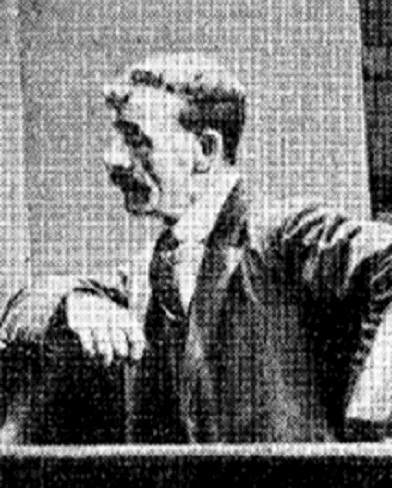
William Grant
The inquest and subsequent trial at the Old Bailey revealed the truth behind the family’s sad life. It wasn’t straightforward; family members contradicted each other, timings were inconsistent and most important, the medical evidence was inconclusive.
Connie was described as, “wearing glasses, short and thin, very dull and very dirty”. James said his stepfather William had hit Connie more than once for being slovenly. James remembered Connie’s foot being swollen and black around Christmas time, 1917. He thought she had chilblains, but her condition was more serious than that. One of her toes broke off as her father bathed her foot; William denied this and challenged James saying, “You are telling lies.” James saw Connie a couple of days later but then she disappeared.
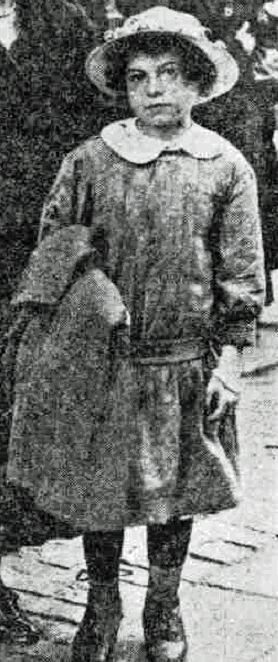
Connie’s sister Ada Grant appeared in court to give evidence. She was malnourished and very small for her age. Chief Inspector Haig of Scotland Yard called her a “little mite”, and in court the jury was assured that despite appearances, she was actually 14-years-old.
Ada GrantAda said Connie did not go out to play and spent most of her time indoors, where they shared the top back bedroom. She’d last seen her when her foot was bad. After that, she never saw her again and when she asked Alice where she was, she was told Connie was in the front room which was always kept locked, with a curtain over the fanlight. Ada remembered Alice saying Connie was in bed the night before they left Pembroke Place. Alice was hissed again when she urged Ada, to speak the truth.
It was Alice who provided the most likely explanation of mystery. She said that after trying to bath Connie’s foot, it became inflamed and Connie couldn’t walk. So she slept in the living room for about a week. Alice said, “I gave her some cake. In the morning I went into the room and found Connie lying dead on the couch. I locked the door and let her lay there and I never told anyone.” Alice said this all happened not in December but March 1918. The reason she was so certain was because a few weeks later on 30 April, she said she gave birth to Doris. Alice said when she had recovered from the birth, she buried Connie’s body under the floorboards in the kitchen.
It is not clear how much William knew. He certainly lied about when he last saw his daughter alive, presumably to protect himself. Alice gave conflicting reasons for concealing Connie’s body: “I did not know what to do. William was a man she could not tell anything to.” But she also said, “I did this to save her father, as I did not want William to get into trouble”. She told her neighbour in Malvern Road that she didn’t want any reconciliation and had once threatened to take poison. But there was some evidence to indicate it wasn’t completely one-sided, that Alice could be a force to be reckoned with. William told a friend, “I am frightened to death. If I left her she would swear my life away.”
Given the condition of the bones, it proved impossible for Dr Spilsbury to establish exactly when poor Connie died. He concluded death occurred sometime between Christmas 1917 and March or April, 1918. The police claimed the bones had been buried as bones. Spilsbury said bluntly that “he could not form any idea as to the cause of death”. Connie might well have died from blood poisoning, given the condition of her foot.
The pathologist concluded that if the body had been placed in the manhole he had seen in the passage and covered with an air tight lid, “nine months would have been sufficient to have cleared the bones”. Perhaps Alice first placed Connie under the manhole, then later removed the bones and buried them. But she always maintained she had put Connie’s intact body under the boards: “The child was put down absolutely whole.” When asked to account for the absence of three ribs, Alice replied that the place was overrun by rats.
At the Old Bailey on 13 Sept 1919, William and Alice were found not guilty of manslaughter but guilty of wilful neglect and disposing of the body. The judge said he was “unable to draw any distinction between the prisoners as to the degree of their guilt.” Although he had encountered worse cases of neglect, he had “never heard of a worse case of thwarting the ends of justice by disposing of a body. This gave rise to grave suspicions which nobody could pretend were cleared away. They had disposed of the body to avoid an inquiry.”
William and Alice were both sentenced to 18 months in prison with hard labour. Four of their children were put in the Willesden workhouse before the trial was held. But we don’t know what happened to baby Doris.